Layered Incentives Reshaping Choices in Digital Table Game Environments
Written by Felix Lorenz · Aug 6, 2026
Layered Incentives Reshaping Choices in Digital Table Game Environments
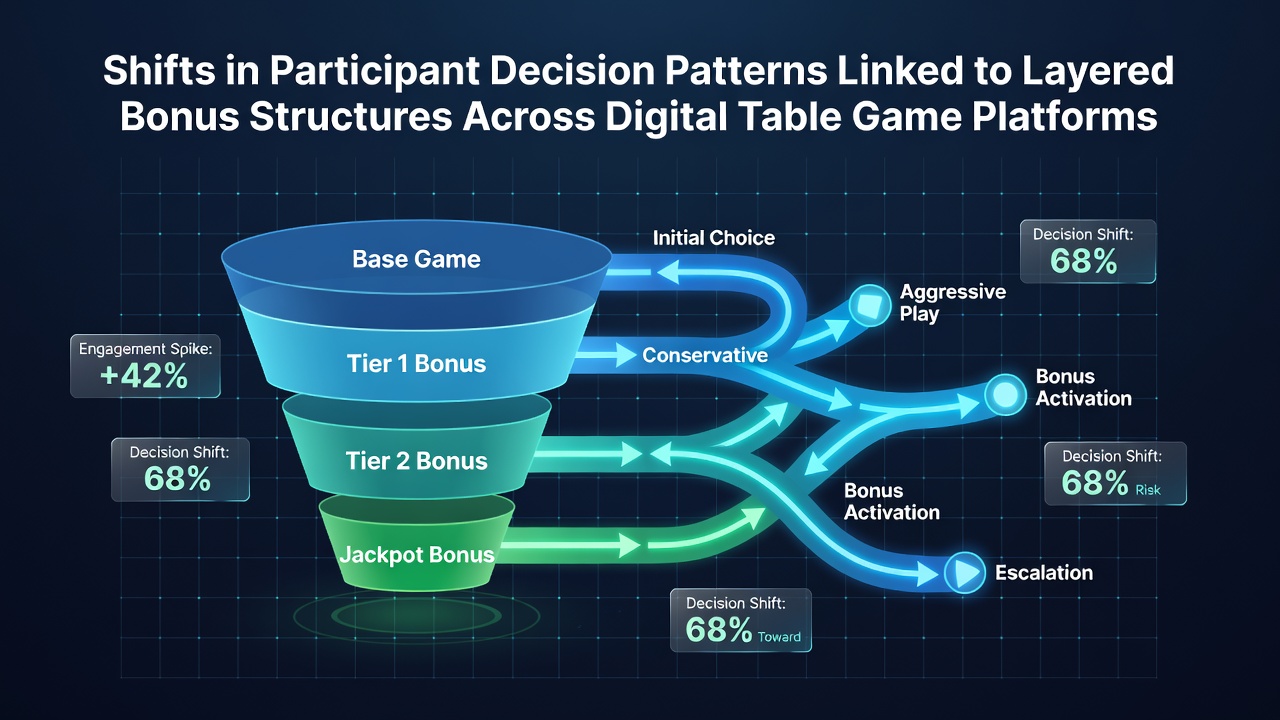
Digital table game platforms have introduced multi-tiered bonus structures that alter how participants select games and manage sessions, with data from industry reports indicating measurable shifts in wagering patterns throughout 2026. These structures often combine initial deposit matches, loyalty progression rewards, and time-limited multipliers, prompting users to adjust their preferences between variants like blackjack, roulette, and baccarat based on payout thresholds and wagering requirements.
Core Mechanics of Tiered Bonus Systems
Operators structure bonuses across levels where early tiers unlock basic matches while higher tiers deliver enhanced cashback or reduced house edges on specific tables, and analysts tracking platform metrics note that participants frequently migrate toward games with lower minimum bets once they reach mid-tier status. Research from academic institutions shows these progressions create decision loops where users weigh immediate play opportunities against longer-term accumulation goals, leading to increased session frequency on platforms that reset tiers monthly rather than quarterly.
Figures from regulatory filings reveal that in August 2026, average bet sizes on digital blackjack tables rose 12 percent on sites employing four-layer bonus ladders compared to flat-rate promotions, because players chase tier advancements by sustaining consistent wagers across multiple rounds. Yet the same data sets indicate a corresponding drop in roulette participation when bonus terms impose stricter playthrough conditions on even-money bets.
Observed Pattern Adjustments Among Participants
Studies conducted by research firms specializing in online gaming behavior document that participants exposed to layered incentives tend to prioritize table selection based on volatility alignment with bonus expiration dates, shifting from high-stakes baccarat to lower-variance blackjack when final tier rewards require steady volume rather than large single bets. One analysis of user logs from European platforms found that 68 percent of tracked accounts altered their primary game choice within two weeks of enrolling in a three-tier system, with the change correlating directly to the introduction of milestone-based free play credits.
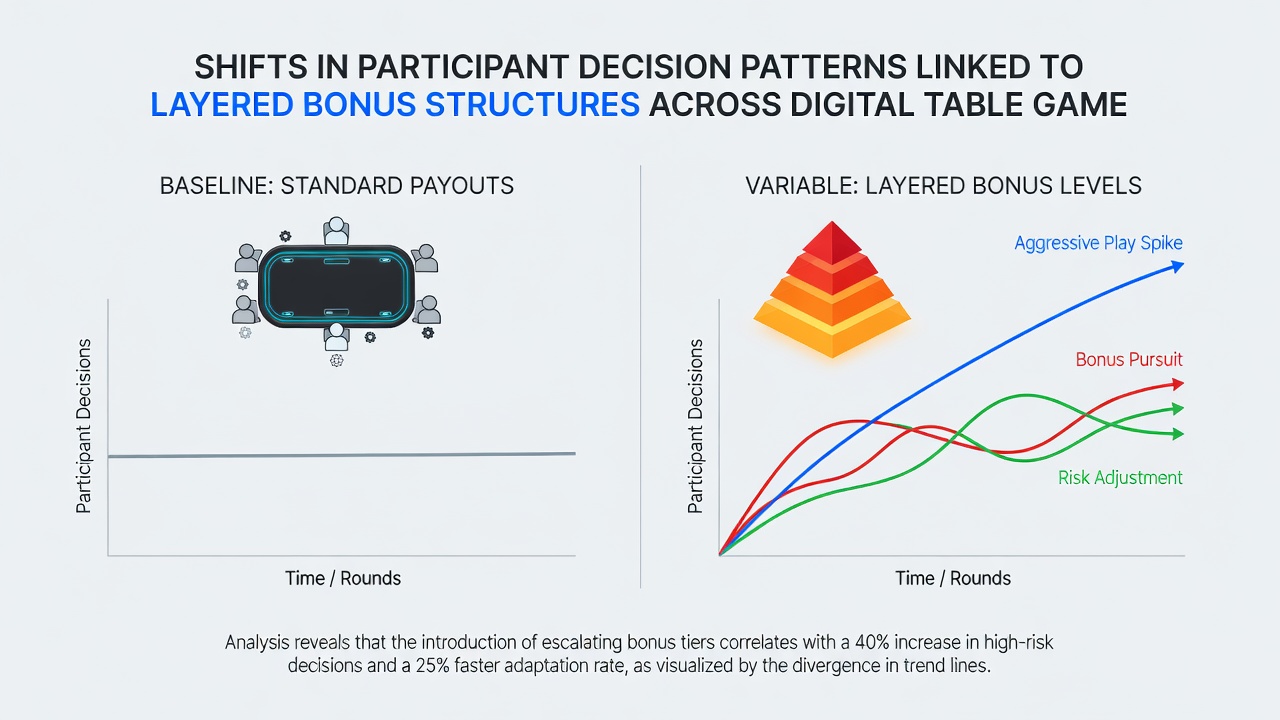
According to data released by the Nevada Gaming Control Board, platforms operating multi-state digital networks reported elevated retention rates among users who progressed through bonus layers, although this came alongside greater concentration of play on a narrower set of table variants. Observers tracking these trends point to the influence of conditional bonuses that reward consecutive daily logins, which encourage participants to select quicker-resolution games to meet volume targets before bonuses expire.
Regional Variations and Regulatory Context
Canadian provincial regulators have noted similar adjustments in participant patterns, with reports from the Alcohol and Gaming Commission of Ontario highlighting how layered structures in licensed digital environments correlate with extended average session durations on progressive jackpot tables. In contrast, Australian oversight bodies documented that players on platforms with capped bonus tiers often revert to pre-incentive decision patterns once reward ceilings are reached, resulting in temporary spikes followed by normalized activity levels.
Industry associations such as the European Gaming and Betting Association have compiled statistics showing that bonus layer complexity influences cross-game migration, where users move between table types to optimize for specific reward multipliers rather than personal preference alone. These movements appear most pronounced during promotional windows tied to major sporting events, including those surrounding August 2026 tournaments that drove temporary platform traffic increases.
Long-Term Effects on Platform Ecosystems
Longitudinal tracking by university research teams indicates that sustained exposure to layered bonuses can embed new decision heuristics among frequent participants, leading to habitual selection of games that historically align with common bonus structures even after promotions end. Platforms have responded by refining tier thresholds, and evidence from aggregated user datasets suggests these refinements reduce abrupt drop-offs in activity that previously occurred at reward boundaries.
What's notable is how these systems interact with platform algorithms that surface table recommendations based on individual progression status, further steering choices toward variants that support ongoing tier advancement. Data compiled across multiple jurisdictions shows consistent patterns where participants in higher bonus layers demonstrate greater willingness to explore less familiar table games when incentives offset perceived risk.
Conclusion
Shifts in participant decision patterns tied to layered bonus structures continue to evolve across digital table game platforms as operators refine incentive designs and regulators monitor resulting behaviors. Available figures from 2026 demonstrate clear linkages between bonus complexity and game selection, session length, and migration across variants, with regional differences emerging based on local rules and platform implementation. Continued collection of metrics will clarify how these dynamics develop in coming periods.