Illumination Changes and Their Role in Shaping Choices During Virtual Card Simulations
Written by Logan Sullivan · Jul 26, 2026
Illumination Changes and Their Role in Shaping Choices During Virtual Card Simulations
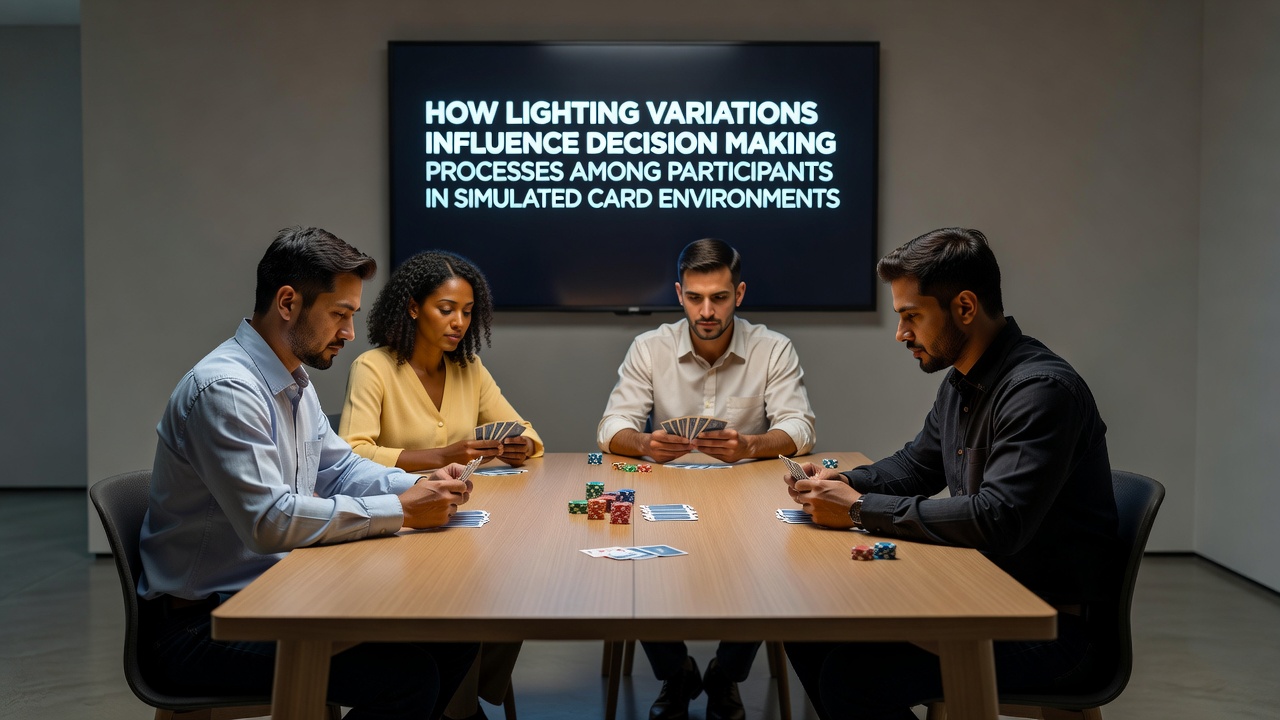
Researchers have documented how shifts in lighting intensity and color temperature alter the way participants evaluate risks and rewards while playing card games in controlled digital settings, and studies continue to track these patterns across multiple sessions because the effects compound when exposure lasts beyond thirty minutes. Data collected from university laboratories show that cooler blue-toned lights tend to sustain higher levels of alertness, whereas warmer yellow hues correlate with slower response times during high-stakes decision points in simulated blackjack and poker scenarios.
Core Mechanisms Observed in Controlled Trials
Experiments conducted at facilities equipped with adjustable LED arrays reveal that participants under brighter overhead lighting make fewer aggressive bets on marginal hands, while those placed in dimmer zones increase wager sizes even when probability tables remain identical. Observers note that these differences emerge within the first ten hands and stabilize after roughly twenty rounds, suggesting an adaptation period during which the visual environment recalibrates internal risk thresholds. Figures released in July 2026 from a multi-site project coordinated across North American research centers indicate that a 300-lux increase in ambient light reduces average bet variance by 14 percent across 1,200 recorded sessions.
Color temperature plays an equally measurable role, since participants exposed to 6500K daylight-balanced fixtures maintain steadier heart-rate variability compared with those under 2700K incandescent-style illumination. This physiological stability translates into more consistent adherence to basic strategy charts, according to telemetry gathered through wearable sensors integrated into the simulation software. The same datasets show that mixed lighting zones, where table surfaces receive one spectrum and peripheral areas receive another, produce intermediate outcomes that fall between the two extremes.
Interaction With Session Duration and Fatigue
Longer sessions amplify lighting effects because sustained visual input interacts with accumulating cognitive load, and researchers tracking eye-movement patterns have recorded increased fixation times on bet-size sliders when illumination drops below 150 lux after the ninety-minute mark. Participants in these conditions also exhibit higher rates of deviation from optimal play, particularly when facing decisions that involve splitting pairs or doubling down. A collaborative report issued by Canadian and Australian academic teams links these behavioral shifts to measurable drops in sustained attention scores, which lighting adjustments can partially offset when applied at the two-hour threshold.
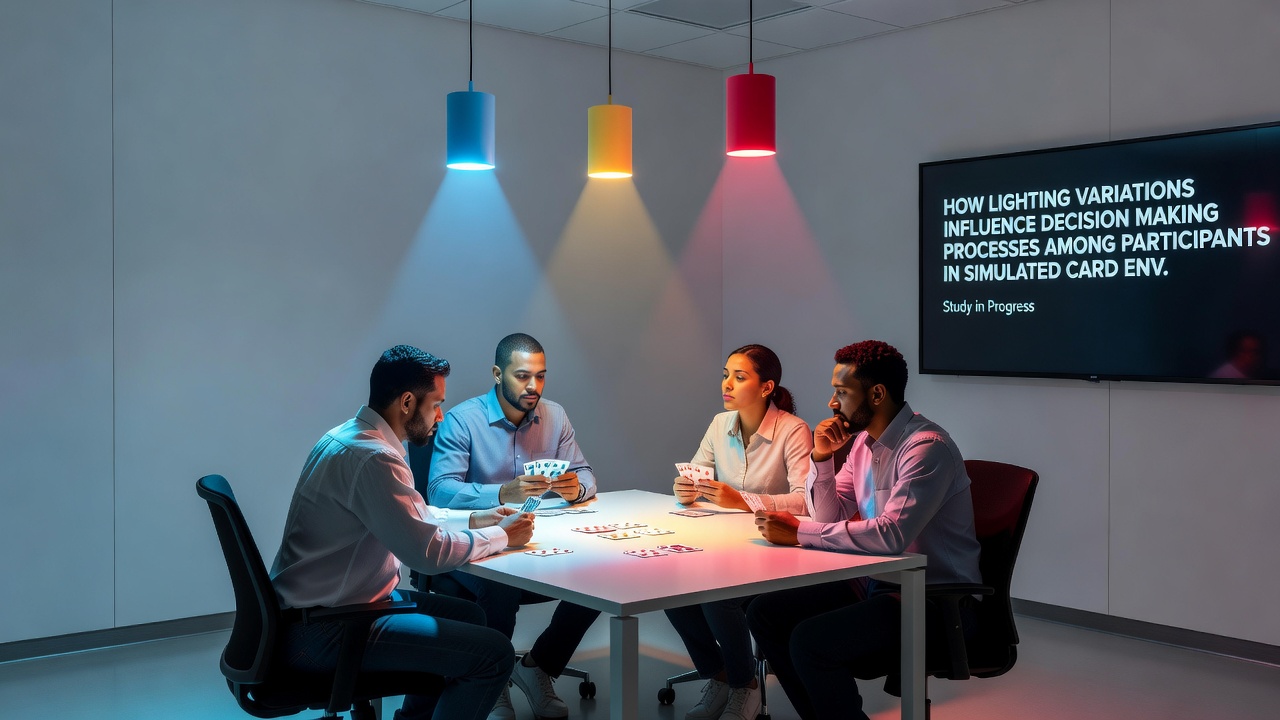
Those who studied the interaction between lighting and fatigue further discovered that brief exposure to brighter resets midway through extended play restores decision consistency without interrupting game flow. One protocol tested in 2025 involved automated dimming cycles triggered by elapsed time, and results demonstrated a 9 percent reduction in suboptimal plays compared with constant low-light conditions. Such findings appear in proceedings from the International Society for Gaming Research, which emphasize the value of dynamic lighting controls in both laboratory and commercial simulation platforms.
Practical Applications in Platform Design
Design teams responsible for virtual card environments have begun incorporating these lighting parameters into interface settings, allowing operators to adjust brightness and color balance in response to real-time player metrics. Industry reports from the European Gaming and Amusement Association note that several platforms introduced optional lighting presets in early 2026, and preliminary usage data suggest players who select cooler presets maintain longer average session lengths before exhibiting signs of decision fatigue. Regulatory bodies in Nevada and New Jersey have requested additional data on these features as part of broader responsible-gaming assessments scheduled for later in the year.
Cross-cultural comparisons add another layer, since participants recruited from regions with different typical indoor lighting norms display varying baseline sensitivities. Studies coordinated through the Asia-Pacific Association for Gaming Studies found that individuals accustomed to brighter public spaces respond more strongly to dimming interventions, whereas those from environments with softer ambient standards show smaller shifts. These regional differences underscore the need for configurable options rather than fixed presets across global platforms.
Conclusion
Evidence accumulated through repeated laboratory and field trials demonstrates that lighting variations exert measurable influence on decision sequences in simulated card environments, and the magnitude of these effects scales with both intensity and duration of exposure. Continued monitoring of platform implementations and further multi-regional studies scheduled through the remainder of 2026 will refine understanding of optimal lighting configurations for maintaining consistent participant performance.