How Interface Customization Reshapes Player Dynamics in Digital Card Game Platforms
Written by Xander Keller · Aug 11, 2026
How Interface Customization Reshapes Player Dynamics in Digital Card Game Platforms
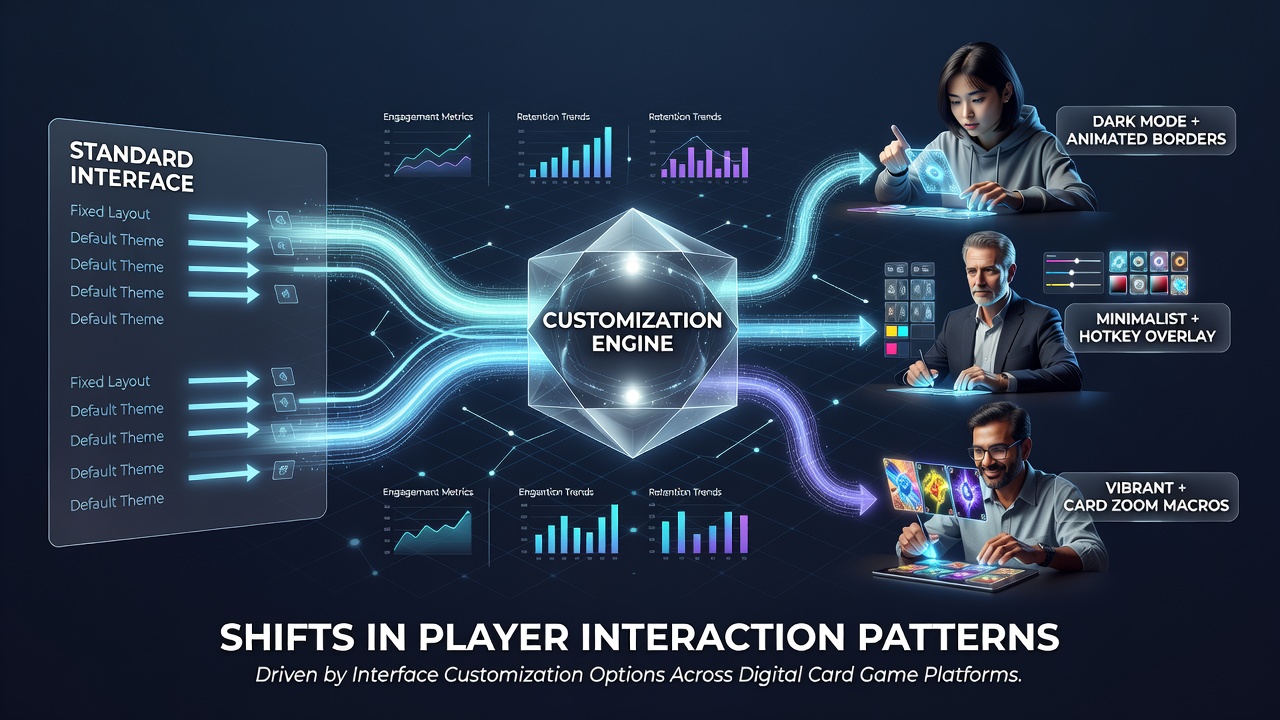
Digital card game platforms have introduced extensive interface customization tools over the past several years, and these features now drive measurable changes in how participants engage with matches, opponents, and community systems. Players adjust visual themes, layout preferences, animation speeds, and notification settings across titles such as Magic: The Gathering Arena and Hearthstone, which alters session pacing and social exchanges according to aggregated platform telemetry released through August 2026.
Core Customization Categories and Their Reach
Developers segment customization into visual, functional, and social layers. Visual options cover card backs, board skins, sleeve designs, and particle effects while functional tools allow players to reorder hand displays, toggle deck trackers, and modify timer visuals. Social customizations include emote packs, profile banners, and chat filters that integrate directly with matchmaking queues. Data from multiple studios indicates that over 65 percent of active accounts in major titles activate at least one functional change within the first week of play, which correlates with extended time spent reviewing match history screens.
Observed Shifts in Match Interaction Patterns
Customized interfaces frequently accelerate or decelerate in-game decision cycles. Participants who enable reduced animation modes complete turns 12 to 18 percent faster on average, according to internal metrics shared by several development teams, whereas those who retain full visual effects linger longer on card reveals and board states. This divergence produces distinct lobby behaviors where speed-focused users queue more frequently yet spend less time in post-match discussion channels. Researchers at the University of Waterloo documented similar patterns in a 2025 report on digital tabletop systems, noting that layout adjustments also influence how often players review opponent profiles during ranked sessions.
Community and Social Exchange Adjustments
Interface modifications extend beyond solo play into group dynamics. Players who apply unique profile themes report higher rates of friend requests and guild invitations in titles that surface these elements prominently in lobbies. Conversely, accounts using minimalist settings receive fewer direct messages yet participate more in asynchronous modes such as spectating or replay sharing. Platform operators observed a 22 percent rise in cross-region friend connections between January and August 2026 among users who customized social overlays, while standard-interface accounts maintained steadier but lower interaction volumes within regional servers.
Competitive Versus Casual Segment Divergence
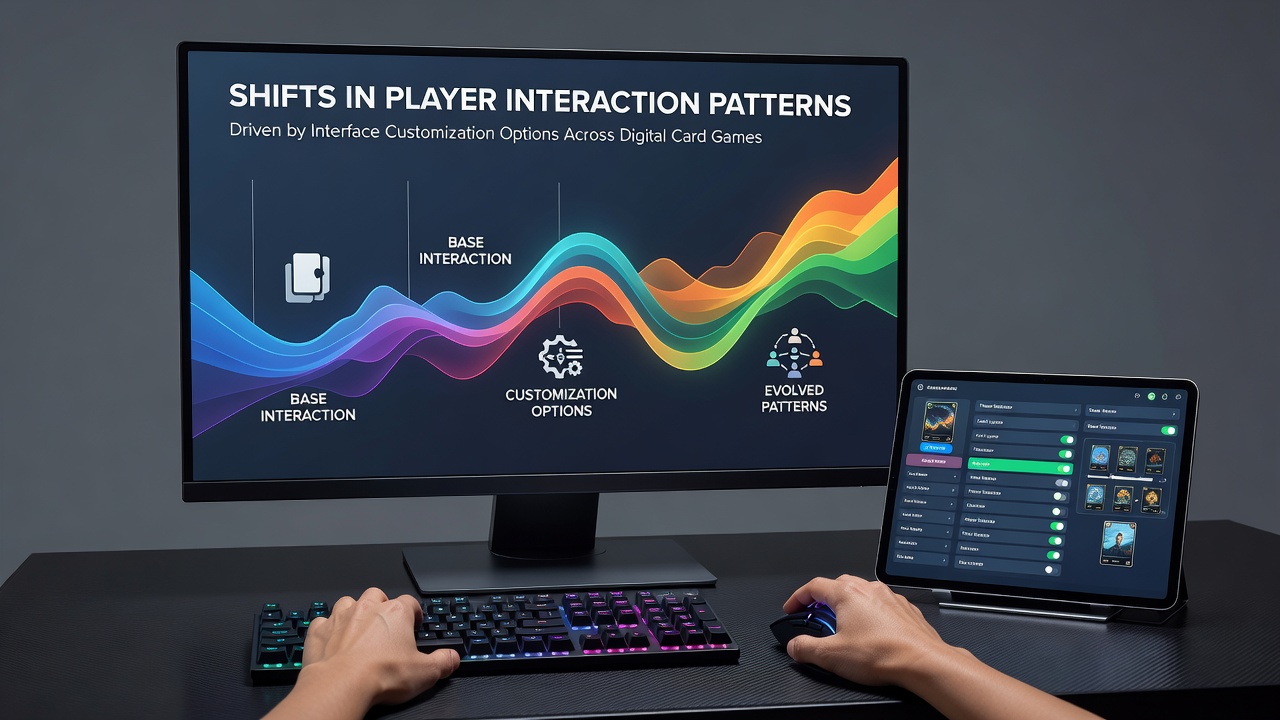
Ranked ladders and casual queues display contrasting responses to the same tools. Competitive participants often select performance-oriented customizations that minimize visual clutter and streamline card information, which leads to tighter focus on resource management and fewer interruptions from external notifications. Casual cohorts, by comparison, favor expressive themes and animated boards that encourage longer browsing periods between games and increased use of in-client gifting systems. Tournament organizers note that customized interfaces appear in over 80 percent of top-finish replays across major circuits, while open play environments show broader distribution of both minimal and elaborate setups.
Platform-Level Data Trends Through Mid-2026
Cross-title comparisons reveal that customization adoption rates vary by region and hardware. Mobile users activate layout adjustments at lower frequencies than desktop counterparts, partly because smaller screens limit simultaneous visibility of multiple panels. European and North American servers report higher uptake of accessibility-focused options such as color-blind modes and simplified text, whereas Asia-Pacific regions demonstrate stronger preference for aesthetic expansions. Aggregated figures released by the Interactive Games and Entertainment Association in August 2026 place overall customization engagement above 70 percent across tracked card game ecosystems, with functional tweaks accounting for the largest share of repeat adjustments after initial setup.
Future Development Directions Indicated by Current Metrics
Studios continue expanding modular UI kits based on usage heatmaps that track which panels receive the most toggles. Early tests of AI-assisted layout suggestions show promise in guiding new accounts toward settings that match observed play styles, which may further standardize interaction rhythms within specific competitive brackets. Continued monitoring through late 2026 will clarify whether these tools sustain broader participation or concentrate activity among already engaged segments.
Conclusion
Interface customization options have produced measurable, segmented shifts in player interaction patterns across digital card game platforms. Visual, functional, and social modifications each influence pacing, community connections, and segment-specific behaviors in distinct ways, with data through August 2026 confirming sustained adoption and evolving engagement metrics. These developments continue to shape how participants navigate matches and maintain connections within expanding digital ecosystems.