Adoption Patterns for Live Dealer Formats Vary Widely Among Emerging Markets
Written by Felix Lorenz · Aug 20, 2026
Adoption Patterns for Live Dealer Formats Vary Widely Among Emerging Markets
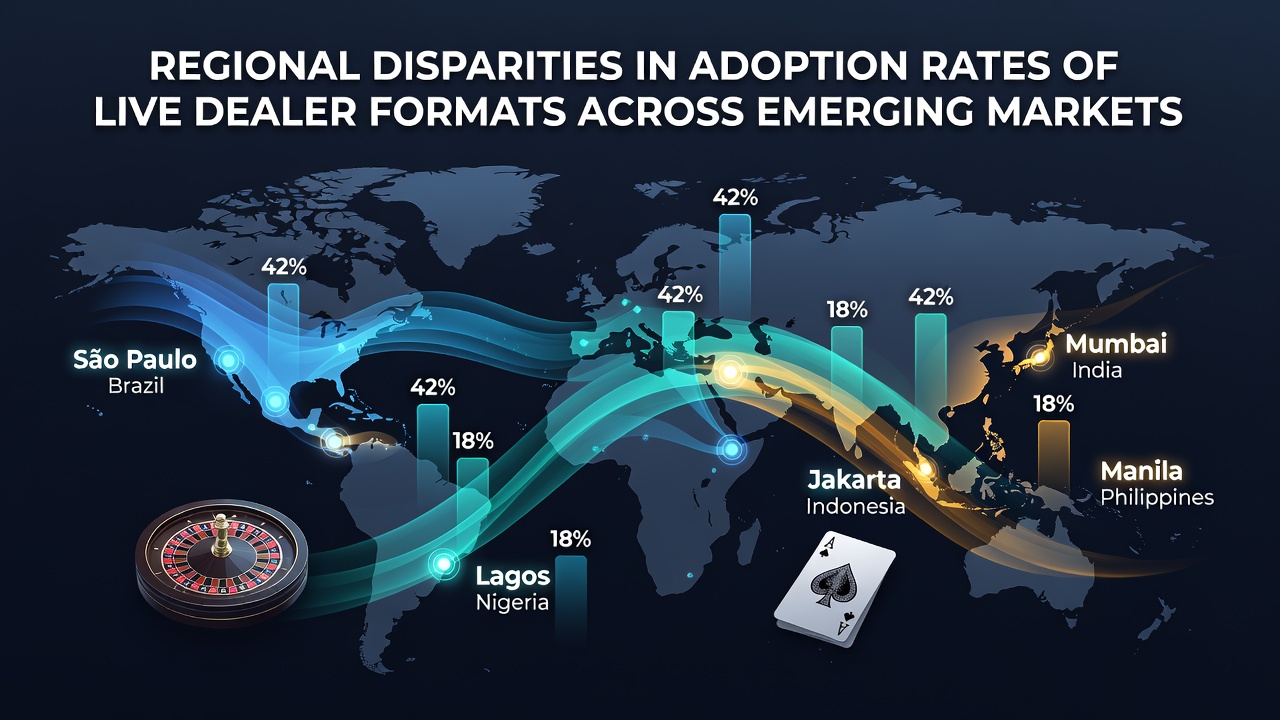
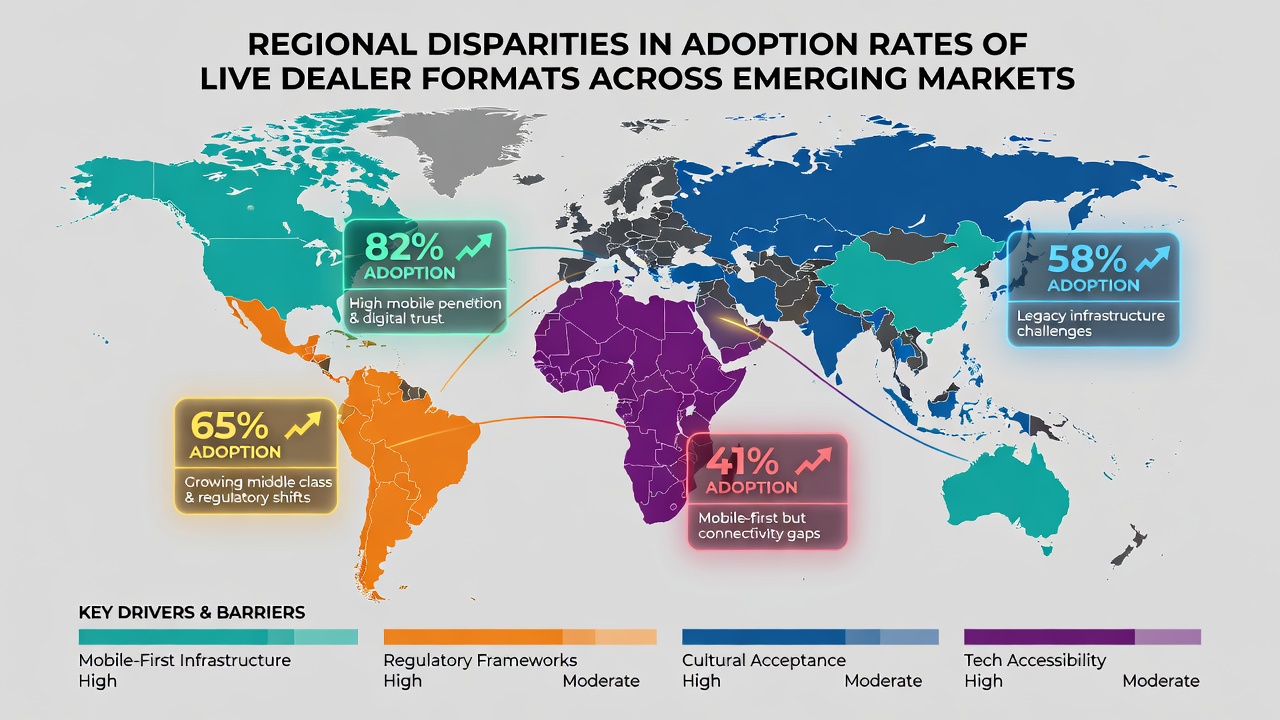
Live dealer formats, which combine real-time video streams with interactive table games, have expanded at different speeds depending on local infrastructure, regulatory frameworks, and consumer access to broadband services. Markets in Latin America recorded faster uptake in certain urban centers during 2025, whereas regions across sub-Saharan Africa showed slower integration tied to connectivity limitations and licensing timelines. Data from industry tracking services indicate that Brazil and Mexico accounted for a combined 62 percent of new live dealer tables launched in Latin America last year, while comparable figures for Nigeria and Kenya remained under 15 percent of the regional total.
Infrastructure and Regulatory Foundations Drive Divergence
Countries with established fiber networks and updated gaming statutes tend to support higher volumes of live dealer studios, and observers note that Mexico's 2024 licensing updates allowed operators to add over 400 new dealer positions by mid-2026. In contrast, several African jurisdictions still operate under older casino-only laws that do not explicitly cover streamed table games, resulting in limited studio construction. Researchers tracking platform launches found that average session lengths in markets with 5G coverage reached 47 minutes, compared with 22 minutes in areas reliant on 3G or satellite links.
August 2026 brought fresh licensing rounds in Colombia and Peru that explicitly included live dealer provisions, and these moves coincided with a 28 percent quarter-over-quarter increase in registered player accounts across both countries. Industry associations in the region reported that operators cited clearer tax structures as the primary factor behind the expansion, while similar clarity remains absent in parts of Southeast Asia where draft rules continue to circulate without final passage.
Payment Systems and Player Preferences Shape Uptake
Payment rails represent another dividing line. Markets that already host widespread digital wallet adoption, such as Vietnam and the Philippines, have seen live dealer tables integrated into existing e-wallet ecosystems with minimal friction. Figures released by regional payment processors show that 71 percent of live dealer deposits in Vietnam during the first half of 2026 originated from mobile wallets, whereas cash-based systems in several Central American nations still require manual verification steps that extend onboarding times.
Player preference data collected by platform analytics firms reveal that blackjack and roulette variants dominate selections in most emerging markets, yet baccarat maintains stronger traction in parts of East Asia. One multi-country survey conducted between March and July 2026 found that Vietnamese players placed 54 percent of live dealer wagers on baccarat tables, while Brazilian participants allocated 48 percent to roulette. These patterns align with existing land-based preferences and influence which studios operators choose to staff and promote.
Studio Location and Cross-Border Operations
Studio geography adds another layer of complexity. Many operators locate live dealer facilities in jurisdictions with favorable bandwidth costs and supportive tax regimes, then stream to players across borders. Manila and Manila-adjacent sites now host studios serving multiple Southeast Asian markets, while Eastern European facilities increasingly supply feeds to Latin American operators. According to a 2026 report from the Asia Gaming Research Institute, cross-border streaming accounted for 39 percent of all live dealer traffic in emerging markets during the second quarter.
Yet regulatory responses differ sharply. Some governments require local studio presence and on-site oversight, and these rules have slowed deployment in certain Indian states and Indonesian provinces. Other jurisdictions permit foreign-hosted streams provided operators maintain local customer service teams and data storage compliance, and this lighter-touch approach correlates with quicker rollout timelines in Chile and Uruguay.
Conclusion
Regional disparities in live dealer adoption continue to reflect differences in connectivity, licensing clarity, payment infrastructure, and cultural game preferences. Markets that address multiple bottlenecks simultaneously record higher table counts and longer average sessions, while those facing regulatory or technical hurdles progress more gradually. Ongoing licensing updates and infrastructure investments scheduled through late 2026 are expected to narrow some gaps, though the pace of convergence will depend on how individual jurisdictions balance consumer protection with market access.